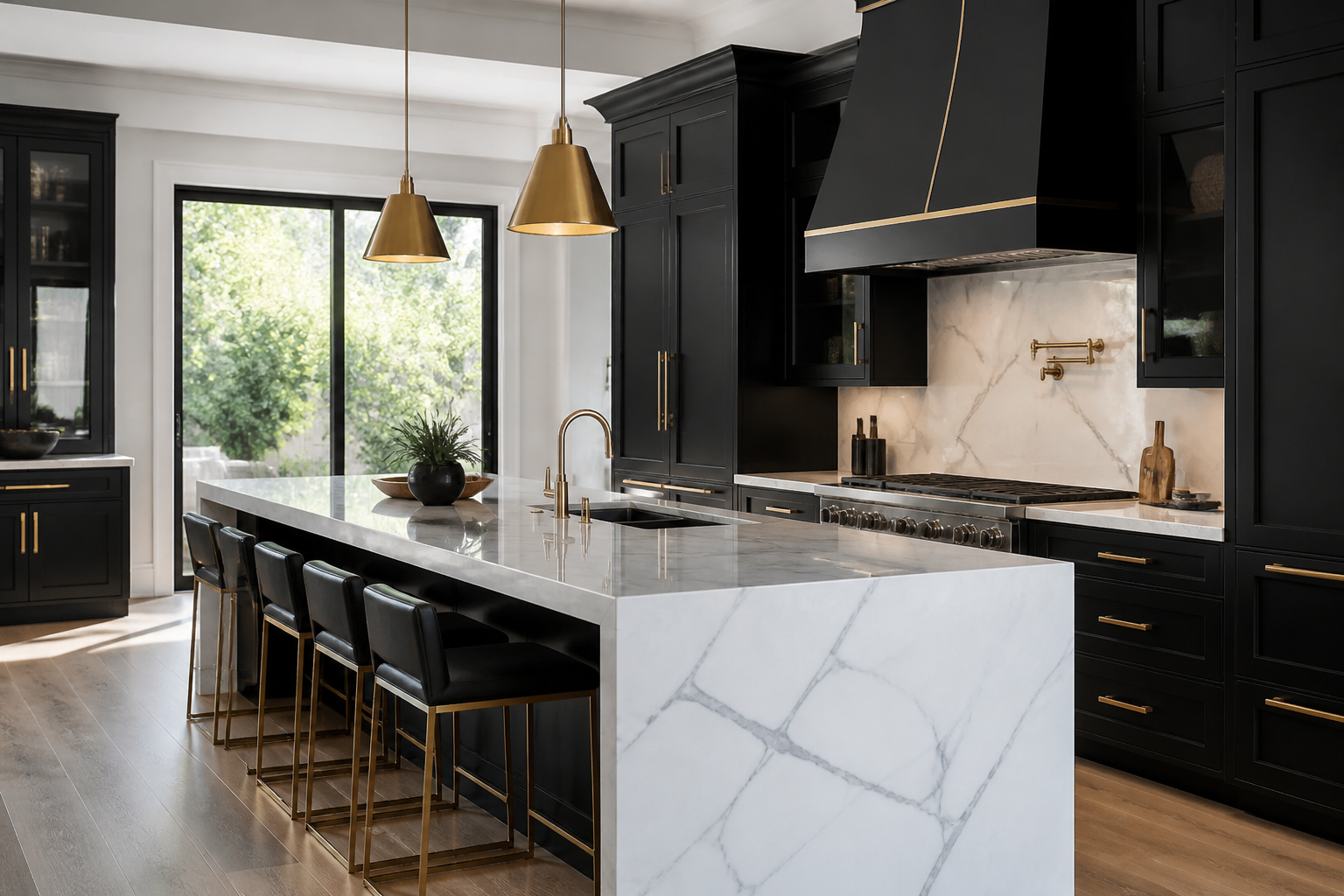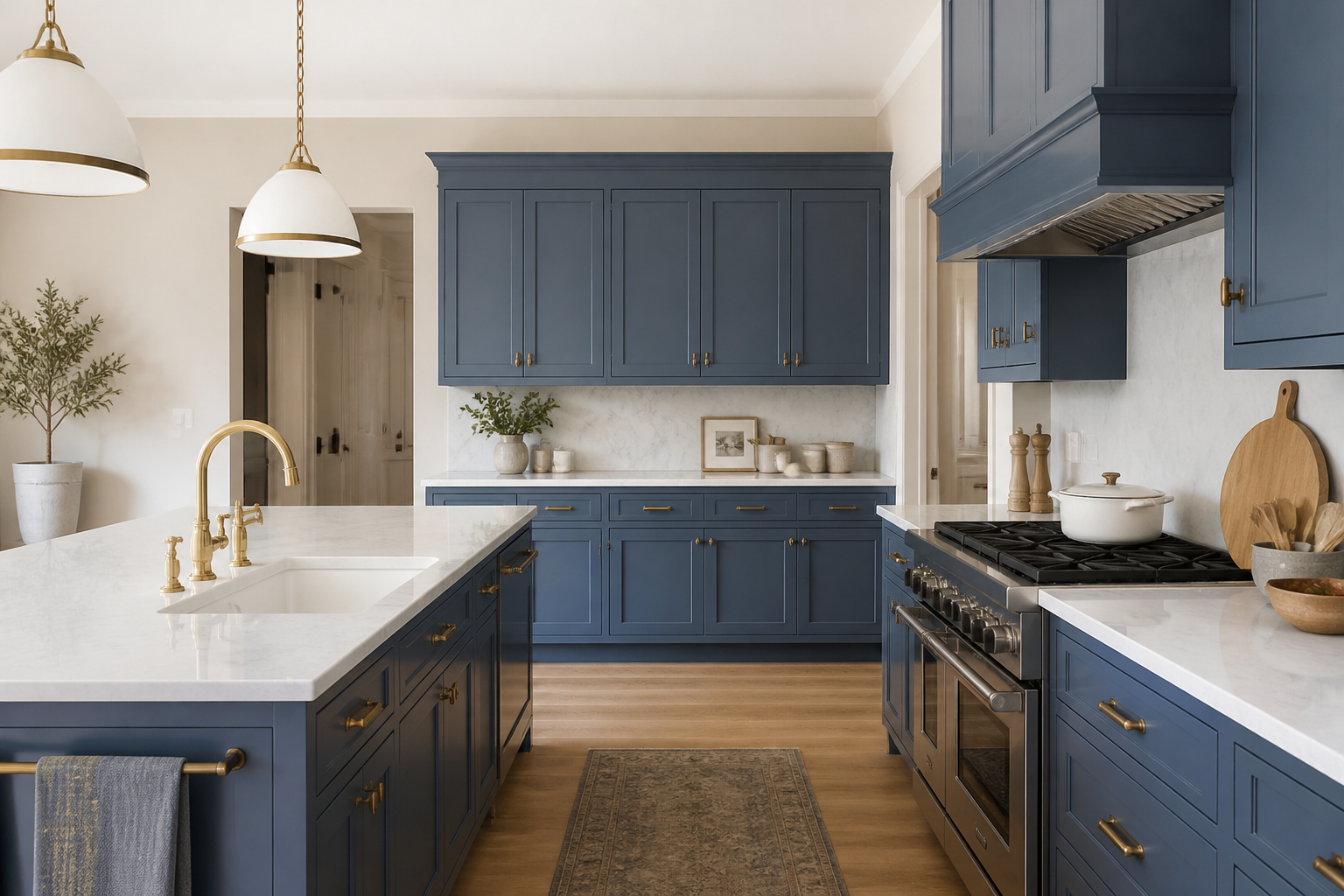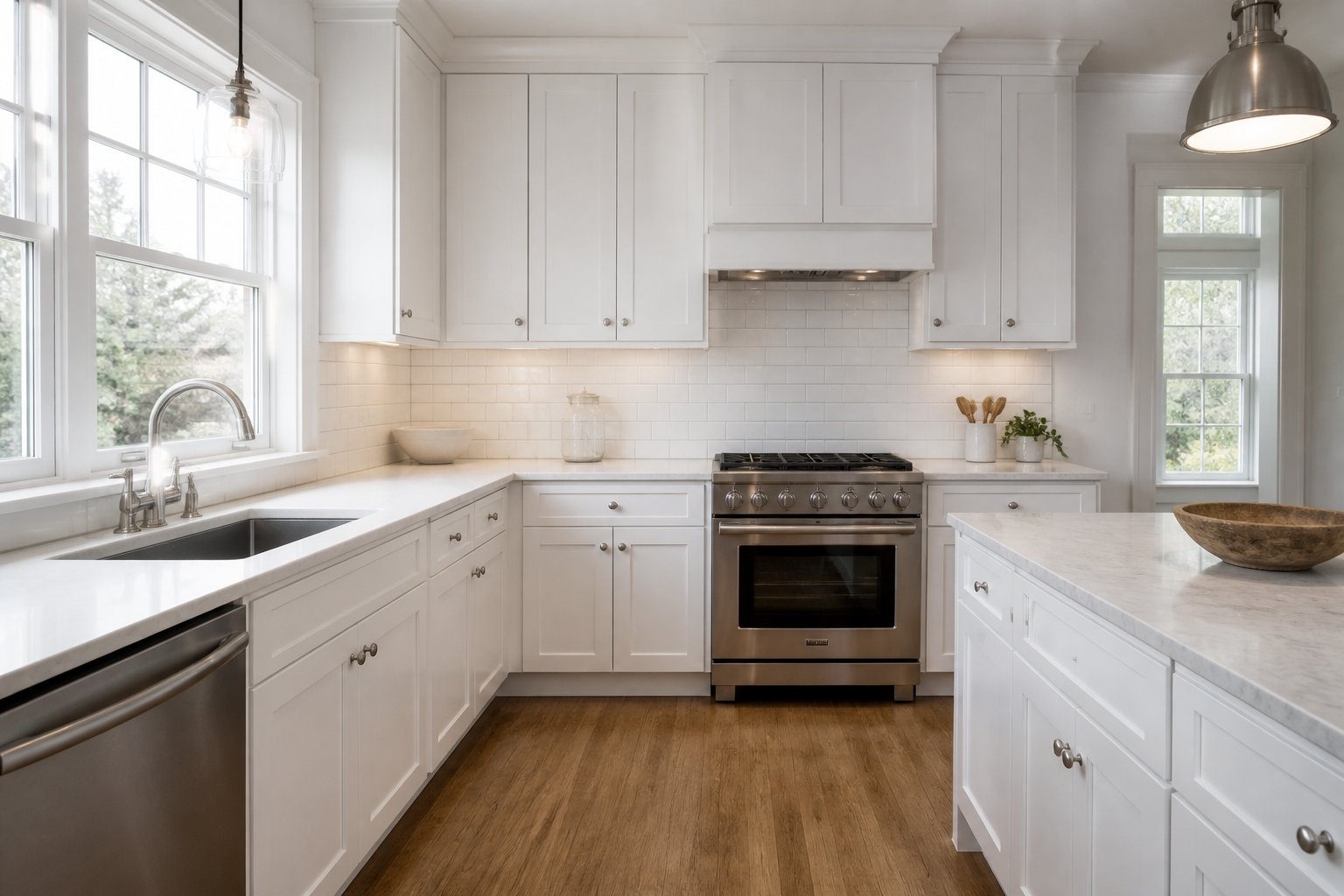
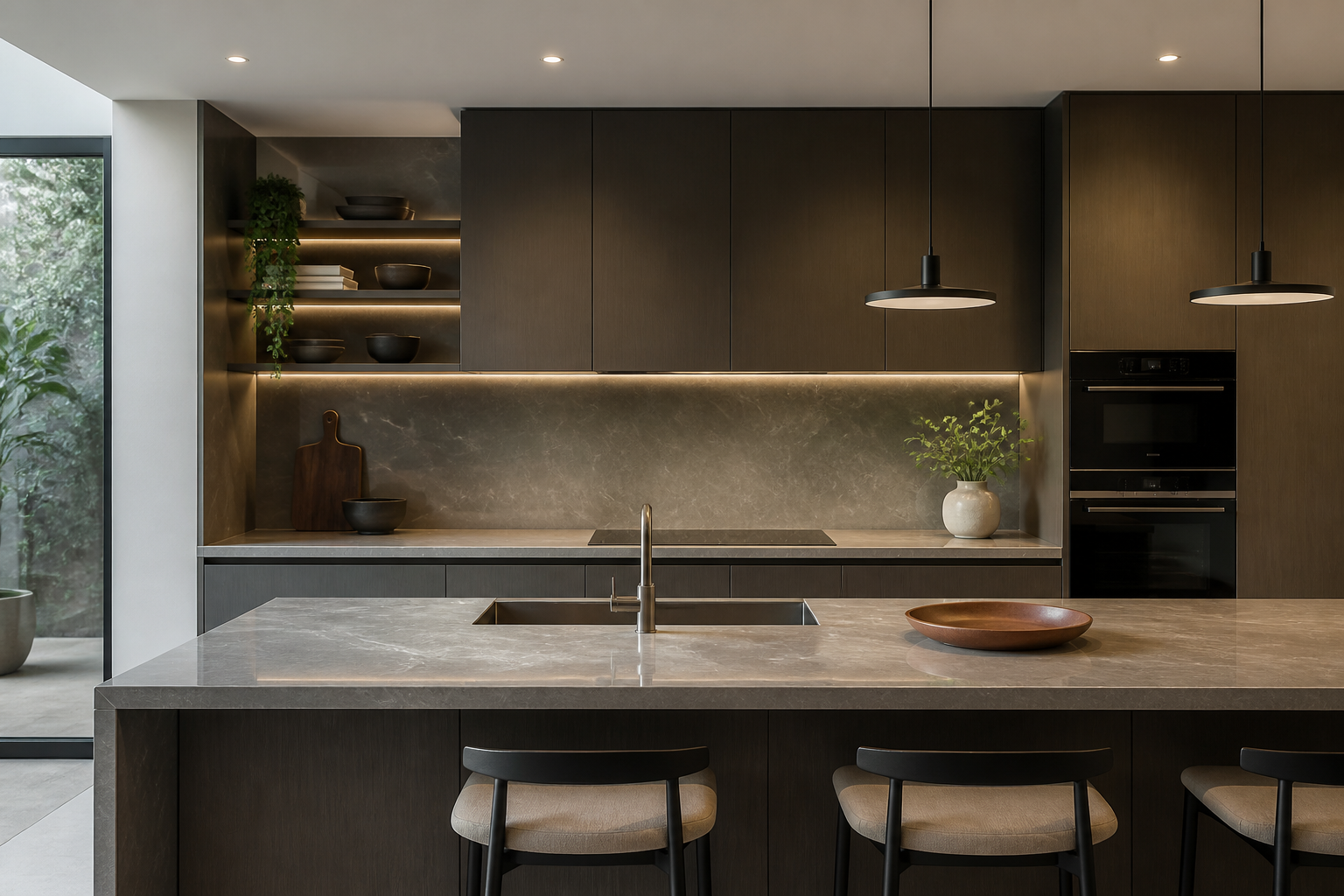
Modern kitchen cabinets are easy to recognize and easy to specify badly. The look is simple — flat planes, thin reveals, quiet hardware — so every mistake shows. A door that is slightly out of plane, a cheap thermofoil edge curling beside a window, a chunky traditional crown glued onto a slab run: those are the tells that a “modern” kitchen was assembled from leftover catalog parts.
This guide is written from the cabinet side of the conversation. I care about door construction, box type, finish chemistry, and how you will open a 36-inch pot drawer when your hands are wet. Style is the last 20 percent. If you are remodeling in the United States, you are also choosing between stock, semi-custom, and true custom shops, and those channels produce very different modern results even when the door looks similar online.
If you already have a photo of the room, you can test slab versus shallow-shaker versus two-tone wood on your actual walls with a visualization tool such as Best Kitchen Design. Use that to narrow the family. Then go to a shop and open real doors.
What “Modern” Means on a Cabinet Door
In cabinet design, modern is not the same as contemporary, minimalist, or mid-century. Contemporary just means “what showrooms are selling this year.” Minimalist means you have reduced hardware, ornament, and often upper cabinets. Mid-century refers to a specific set of proportions, tapers, and wood species. Modern, in a kitchen, usually means: planar doors, restrained profiles, and a composition that reads as architecture rather than furniture collection.
The default modern door is a slab — a flat panel with no raised center and no applied molding. Slabs can be painted MDF, veneered plywood, acrylic, laminate, or a textured polymer. A well-made slab is dead flat. A poorly made slab telegraphs every change in humidity. If you live in a humid coastal climate or a house that swings from dry winter heat to sticky August, ask the shop how the core is built and how the edges are banded. A slab is unforgiving of cheap cores.
A shallow-shaker or “modern shaker” sits next to the slab in many US projects. The rail and stile are skinny, the recess is shallow, and the door still reads clean from the living room. It is a useful compromise if you want a little shadow line so fingerprints and slight warps are less obvious than on a true slab. It is not traditional shaker; do not mix a fat five-piece door on the island with a skinny modern shaker on the walls unless you are doing it on purpose.
Frameless (often called European) boxes give you a modern look even when the door has a small profile. There is no face frame, so you see more door and more usable interior. Face-frame boxes can still look modern if the overlay is full and the frame is hidden. Face-frame is common in American semi-custom lines and can be sturdier to install on out-of-square walls. Neither box type is morally superior. Frameless gives cleaner lines and slightly more storage; face-frame can hide a wavy plaster wall.
Inset doors — sitting inside a frame, flush with it — can look very modern if the gaps are tight and even. They also cost more and punish a house that moves. I specify inset for clients who want furniture-quality work and have a shop that will come back if a seasonal gap opens. I do not specify inset as a budget modern trick.
Handleless systems are the other modern signature. You can do a true j-pull or integrated channel, a push-to-open mechanism, or a long bar that is so thin it almost disappears. Push-to-open feels magical on uppers and annoying on a heavy trash pull-out you hit with a hip. Integrated channels look best when the horizontal lines align across a whole run. If your ceiling is out of level, a long handleless run will announce it.
Avoid bolting traditional parts onto a modern box. Dentil crown, corbels under a microwave shelf, and raised-panel end panels fight slab doors. If you need a valance for an under-mount hood, keep it a simple plane. If you need a furniture end on an island, use a slab panel or a wood waterfall, not a cathedral panel leftover from a previous quote.
Construction, Finishes, and What Fails First
Cabinet design is a construction problem dressed as a style problem. The parts that fail first in modern kitchens are edges, high-heat locations, and anything that relies on a film sitting on MDF.
Painted modern doors are often MDF for the slab because MDF mills flat. Factory paint with a catalyzed or UV-cured finish will outlast a contractor’s sprayer in a dusty garage. Ask about sheen. Ultra-matte hides fingerprints on mid colors and can scuff; a satin is easier to wipe and shows more grease. Dark modern paints — charcoal, black-green, inky blue — need better lighting and better wipe-down habits than a light oatmeal.
Wood veneer is the honest modern material. Oak, walnut, and rift white oak read as architecture. Specify grain direction. Horizontal grain on a long low island looks intentional; mixed directions look like leftover sheets. Veneer can be stained or left clear. It will dent if you treat it like laminate. It will not peel the way a cheap film can.
Laminate and compact laminate are underrated. A good horizontal-grade laminate on a quality core is tough, repairable at the edge if the shop knows how, and available in solids that do not try to fake marble. Compact (thicker) laminate can become a thin, durable door with a dark core that looks considered in a modern kitchen.
Acrylic and high-gloss polymers give you that showroom bounce. They also show every fingerprint and every seam. I like gloss as an accent — a tall pantry wall, a coffee run — not as every door in a family kitchen with three kids.
Thermofoil (vinyl over MDF) is how a lot of “modern white slab” cabinets hit a price point. Near a south-facing window or a range that throws heat, the film can lift. If the bid is dramatically cheaper than painted or laminate, ask what the door skin is. There is a place for thermofoil in a rental or a short-hold house. There is no place for surprise thermofoil in a kitchen you expect to keep for fifteen years.
Interiors matter. Specify plywood boxes if you can, especially for wide drawers and tall pantries. Particleboard with a decent edge band is common and acceptable if the hardware is good and the span is supported. What is not acceptable is a 36-inch drawer with undermount slides that were sized for a 24-inch drawer. Modern kitchen cabinets often mean wide drawers. Ask for the slide brand and the weight rating.
Hardware is not an afterthought. Full-extension undermount slides, soft-close hinges with enough opening angle for a corner, and a toe-kick vacuum if you are already spending on details — these are the unphotographed parts of kitchen cabinet styles that you feel every day. For handleless systems, budget extra for the aluminum channels and for the installer who will align them. A crooked channel is more obvious than a crooked knob.
Hardware, Interiors, and How Modern Storage Should Work
Modern cabinet design fails when the outside is a gallery and the inside is a 1990s box with one shelf. You bought the clean exterior so the counters could stay empty. That only happens if the interiors are planned.
Drawers should do the heavy lifting on the base run. Pots, dishes, and pantry overflow belong in deep drawers, not in a dark base cabinet behind two doors. Use peg systems for dishes if you hate stacking. Use a narrow pull-out for oils beside the range. Use a wider drawer with a peg or pegboard insert for lids. A modern kitchen without a trash-and-recycle pull-out next to the sink is not finished.
Uppers in a modern kitchen are often fewer, taller, or replaced by a pantry wall. If you keep uppers, consider a mix: closed slabs at eye level, a single open niche for the daily objects, and glass only if you like dusting. Glass in a modern run should be simple — no divided lites unless you are quoting a different style.
Tall units are the modern pantry. A floor-to-ceiling cabinet wall can hide a fridge, a broom, and the cereal. Align the doors so you get a single plane. Refrigerator panels should be specified with the appliance model, not “we will figure out the panels later.” Later is how you get a 1-inch reveal that ruins the modern line.
Islands in modern kitchens often wear a different finish than the perimeter — walnut against painted oatmeal, or a stone waterfall against oak. That two-tone move only works if the door style stays in the same family. Do not put a raised panel on the island and slabs on the walls and call it contrast. Contrast the material, not the century.
Lighting integrates with modern cabinet design more than with traditional. Undercabinet linear LEDs should be recessed into a light rail or the bottom of the box so you do not see a strip of diodes in the glass backsplash. In-cabinet lighting for glass or for a coffee alcove needs a separate switch. If you are doing handleless uppers, think about where your fingers go so you are not greasing a lit reveal.
Appliance integration is a modern tell. Panel-ready dishwashers and fridges keep the plane. They also cost more and complicate service. A stainless column fridge can still look modern if the rest of the metal is edited. What looks not modern is five different appliance brands in five different steels plus a bronze faucet plus black hardware. Pick a metal story and keep it short.
When you shop kitchen cabinet styles, ignore the room vignette and open the door. Look at the hinge cup, the edge band, the back of the door, and the interior finish. Rub the finish with a thumb. Ask how a chipped corner gets touched up. Modern finishes are harder to spot-repair than a stained cherry door from 2004. Budget a small touch-up kit and a shop that will still answer the phone.
Specifying Modern Cabinets Without Getting Burned
Start with the box and the door family, not the color. Write down: frameless or face-frame, slab or shallow-shaker, painted or wood or laminate, bar pull or integrated handle. That sentence is your cabinet design brief. Color comes after you have held samples in your north light and your night lighting.
Measure appliances before you bid cabinets. A counter-depth fridge, a 30-inch versus 36-inch range, and a microwave drawer versus a wall oven change the elevations. Modern kitchens punish last-minute appliance swaps because the planes stop lining up.
Ask for elevations, not just a floor plan. You want to see door splits, filler pieces, and how the run dies into a window. Fillers are the silent killers of modern design. A 3-inch filler beside a window can look like a missing tooth. A good shop will show you how they are splitting doors so the rhythm is even.
If you are comparing bids, do not compare door style alone. Compare box material, finish process, hinge and slide brands, delivery weeks, and who installs. Stock modern lines can look excellent if the installer is careful and the room is square. Semi-custom gives you more sizes. Custom gives you inset, weird soffits, and a furniture island. Paying custom prices for a stock-looking slab with mediocre slides is not a win.
Test the look on your kitchen, not the showroom’s. Photograph the room in daylight without the wide-angle lie, then run a couple of modern options — light oak slab, dark painted slab, two-tone — through Best Kitchen Design. You will learn quickly whether a handleless dark run makes your low-ceiling galley feel like a tunnel. That lesson is cheaper than a change order.
Lead times are part of the specification. Painted doors and imported acrylics can both be slow. Do not demo until you have a ship date you believe. Store doors the way the shop tells you to. A warped slab is often a storage story, not a manufacturing story.
Finally, plan the last 5 percent: matching end panels, finished backs on islands, a scribe strategy for uneven walls, and a crown or reveal at the ceiling. Modern kitchen cabinets either die cleanly into architecture or they look like they were dropped into a builder box. The difference is usually a filler, a panel, and an installer who cares about a 2-millimeter gap.
Frequently Asked Questions
Are slab cabinets the only modern kitchen cabinets?
No. Shallow-shaker, inset slabs, and even a simple beadless five-piece door can read modern if the proportions are thin and the hardware is quiet. Slab is the default, not the requirement. What does not read modern is a heavy raised panel with a rope molding, no matter how matte the paint is.
Should I choose frameless cabinets for a modern look?
Frameless boxes make full-overlay doors look seamless and give you a bit more interior width. Face-frame boxes can still look modern with a full overlay. Choose based on your walls, your shop, and your budget. Do not assume “European” automatically means better finish.
Do handleless cabinets make sense in a family kitchen?
They can, if you use integrated pulls on uppers and real bars or sturdy channels on heavy base drawers. Full push-to-open on trash and deep pot drawers frustrates people. Try the mechanism in a showroom with a loaded drawer, not an empty display door.
What finish lasts on modern kitchen cabinets?
Factory-painted doors, quality laminate, and wood veneer with a proper clear coat are the durable everyday choices. High-gloss films and bargain thermofoil need more caveats. Ask what the door core is and how heat and sunlight are handled near windows and the range.
How do I match modern cabinets to an existing house?
Keep the door simple and borrow warmth from the house: a wood island, a softer paint, or hardware that relates to existing metals. A stark showroom-white slab kitchen in a 1920s bungalow often looks like a popup. Modern can be quiet and still belong.
Visualize Modern Cabinets in Your Kitchen
Upload a photo of your current kitchen at bestkitchendesign.com/create and try modern cabinet directions on your real walls — slab, shallow-shaker, wood, painted, two-tone — before you sign a shop drawing.
Best Kitchen Design checkout runs through Polar. Mini is $14 a month if you are testing one room, Personal is $18 if the rest of the house is next, and Premium is $36 if you want a large stack of options. See pricing, pick a cabinet story you can defend in daylight, then take the stills to a cabinet designer who can turn them into boxes, slides, and a lead time.