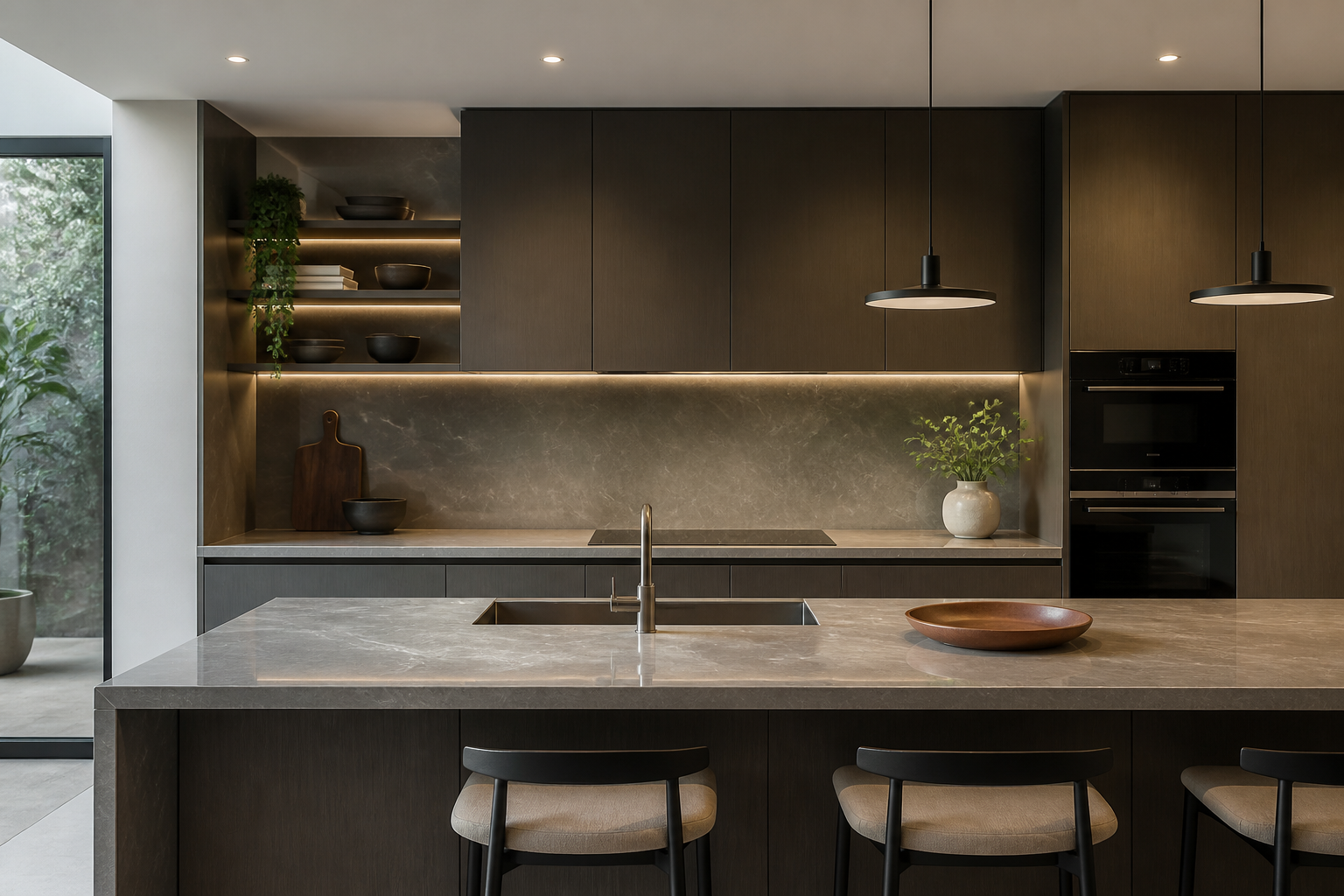
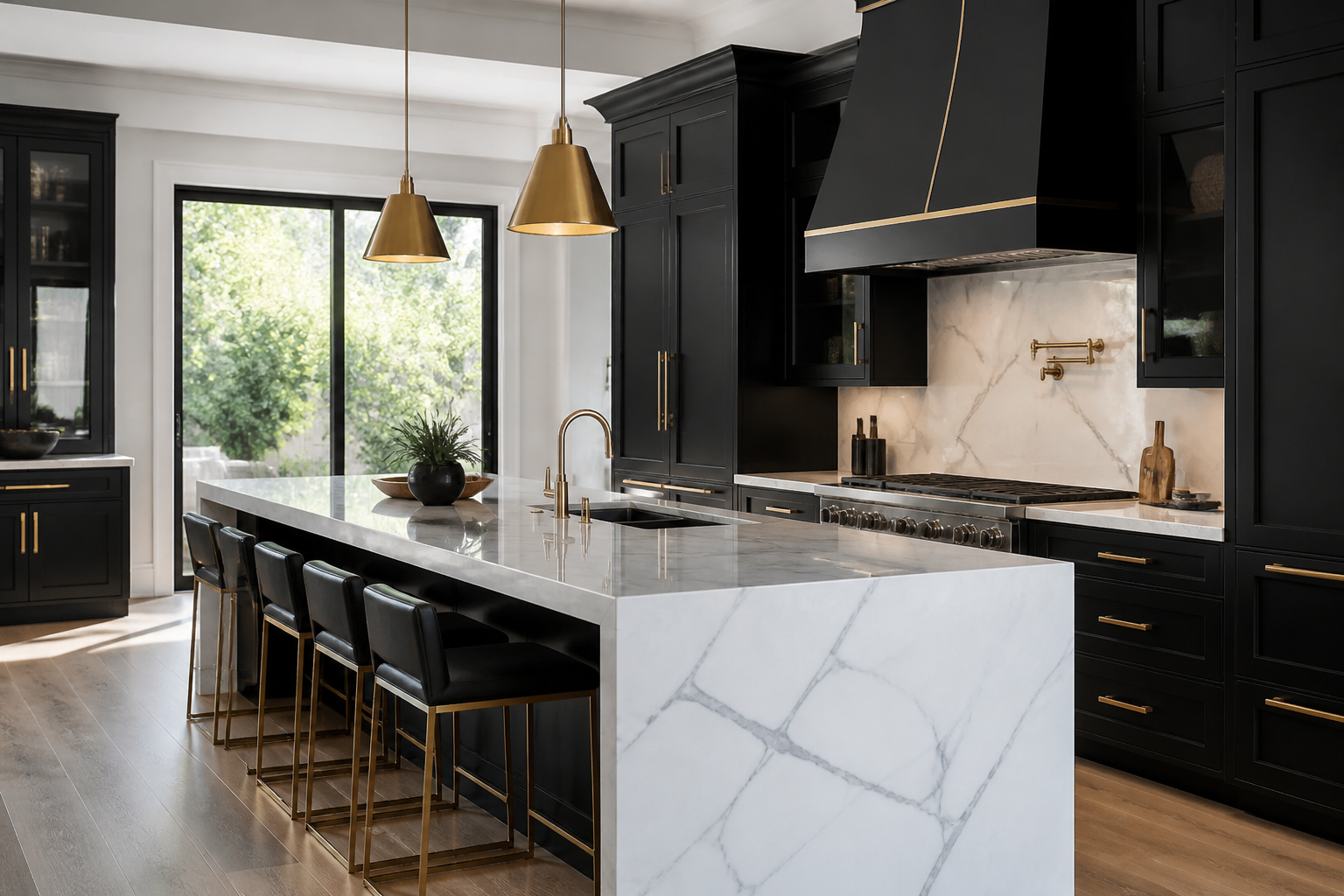
Black kitchen cabinets are a lighting project that happens to use paint. In a room with decent windows, a thoughtful sheen, and one warmer material, black reads as tailored — the luxury kitchen design people mean when they say “moody” without meaning “I cannot see the knife.” In a closed galley with one sliding door and cool recessed cans, the same cabinets read as a cave. The door did not fail. The volume did.
I come at this as an interior architect. Proportion and light come before the trend cycle. Black is not a personality transplant for a house that wants to be pale oak. It is a contrast tool. Used on an island, a pantry wall, or a full perimeter in the right room, black kitchen cabinets can be one of the most controlled kitchen cabinet styles you can specify. Used on every plane in a dark house, they ask more of your electrician than of your painter.
Try a black option on a photograph of your actual kitchen if you want a gut check — Best Kitchen Design is built for that kind of overlay. Then stand in the room at 6:30 p.m. in winter. That is the test.
When Black Works — and When It Shrinks the Room
Black recedes. That can be elegant: the cabinets step back and the stone, the wood floor, or the window becomes the subject. It can also erase the corners you use to understand a small room. If you cannot name the shape of your kitchen in the dark, adding black perimeters will not help you.
Rooms that take black well: kitchens with two or more real windows, kitchens that open to a brighter living space, kitchens with a light floor and a light counter, kitchens where you can add a lot of layered light. Tall ceilings help. A black run under a high clerestory can look like a furniture base, which is a luxury kitchen design move.
Rooms that fight black: interior galleys, basement accessory kitchens, rooms with heavy brown cabinets you are only half replacing, rooms with yellow can lights you do not plan to change. You can still do black in a small kitchen — I have — but it usually wants to be the island or the base cabinets, not every upper.
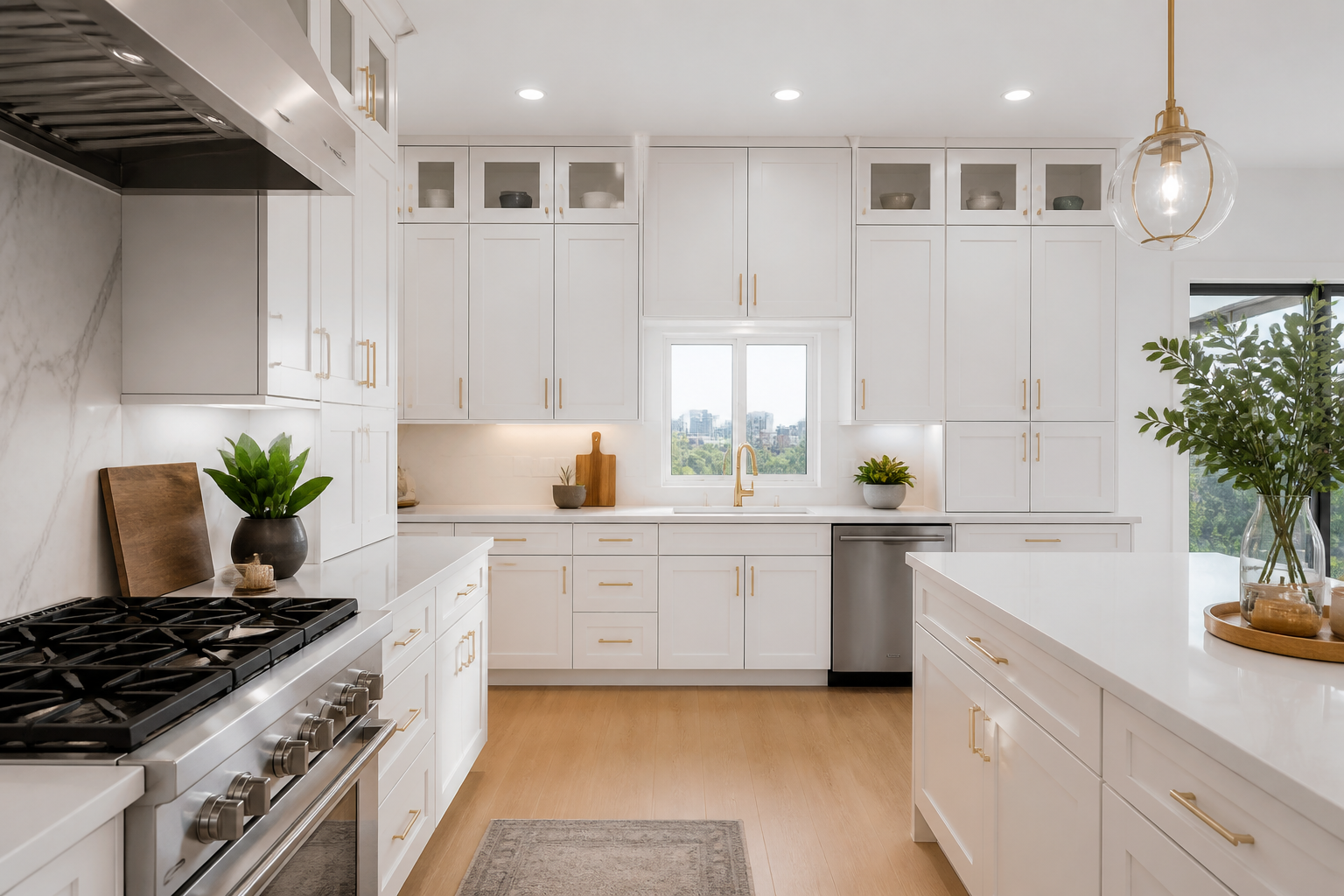
Half-black is a strategy, not a compromise. Black bases and light uppers keep the mass on the floor and the bounce on the walls. A black island in a white or wood perimeter kitchen is the most common successful use I specify. A black pantry wall that hides a fridge can look like architecture. Full black uppers and lowers is a commitment that needs a lighting plan on paper, not a hope.
Undertone still exists in black. Some blacks are blue-black, some are green-black, some are brown-black (easier next to oak), some are purple under LED. Sample a door. A “universal black” on a phone screen is not a specification.
Sheen decides whether black is velvet or a mirror. A soft matte or satin hides some fingerprints and looks more architectural. A piano gloss is a luxury kitchen design statement and a fingerprint ledger. I like gloss as a tall accent — a single pantry composition — more than as every drawer a kid opens for snacks.
Texture helps black avoid the rental-matte-black-faucet kit look. A wood hood, a plaster, a honed stone, a ribbed glass, a leather stool. Kitchen cabinet styles that rely on black paint plus black hardware plus black windows plus black pendant can feel like a sticker sheet. Let one or two elements stay pale or metallic or timber.
Pairing Stone, Wood, and Metal With Black Cabinets
Black kitchen cabinets need neighbors with a job.
Counters: Light stone — a quiet marble, a soft quartz, a pale porcelain — is the obvious lift. It gives you a horizon line and a place to prep. Warm stones (cream, lightly toasted taupe) keep the room from going tuxedo-cold. A black counter on black cabinets is possible if the sheens differ and the floor is light; it is also how you lose the edge of the island with a knife in your hand. If you go dark-on-dark, add a wood cutting zone or a different island top so the work surface remains visible.
Veining: a little movement is welcome. A high-contrast photocopy slab plus black shaker plus busy tile is noise. Luxury kitchen design is often subtraction.
Floors: Light oak, white oak, a pale limestone-look porcelain, even a warm terracotta if the black is brown-black. Red-yellow builder oak can clash with a blue-black door. You may refinish, rug the aisle, or choose a softer black. Do not pretend the clash is “eclectic” if it bothers you every morning.
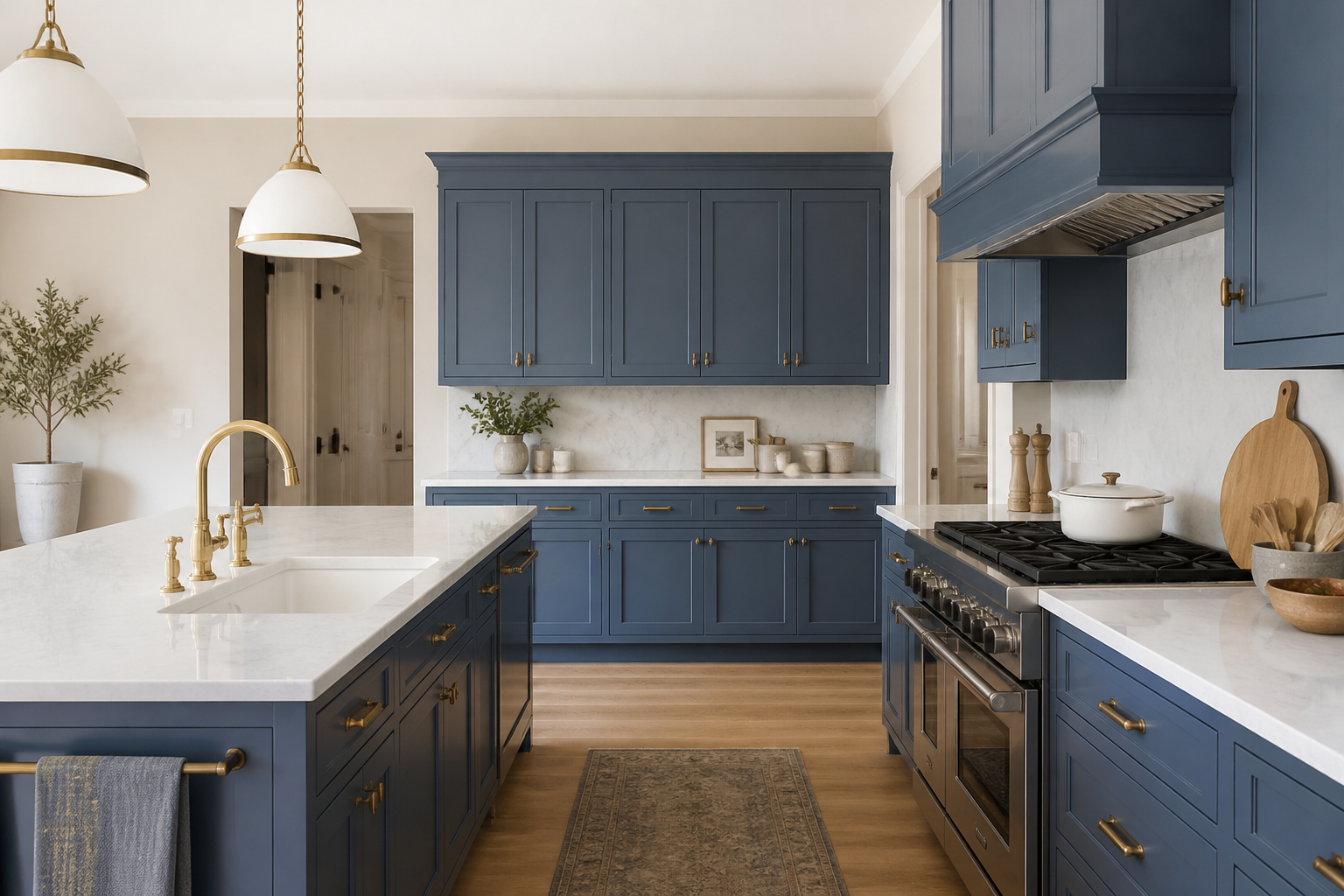
Metals: Brass and champagne bronze are the warmth move. Polished nickel is the crisp move. Stainless will appear on the range whether you like it or not; decide if it is featured or minimized. All-black hardware on black doors can disappear, which is either elegant or annoying when you are hunting for a pull. I often spec a slightly different metal for pulls so the hand finds them. Unlacquered brass on black is a pairing that ages into luxury instead of into a matched set from one manufacturer.
Backsplash: Full-height light stone is calm. A handmade light tile adds the texture black paint does not provide. A dark tile on a dark cabinet run erases the splash zone — only do it if the grout and the sheen create a readable grid and you have excellent task light. A window as backsplash is the best luxury: if you can keep uppers off a garden view, black bases become a frame.
Walls and ceiling: Do not paint the walls the same black unless you are doing a true envelope and have the light to support it. A warm white, a plaster, or a soft clay wall lets the cabinets be the dark object. Ceilings should stay light in almost every residential case. A black ceiling in a kitchen is a restaurant move and it eats household lighting.
Wood: One species. Walnut against black is a known luxury kitchen design pair. Oak is more casual and very livable. Mixed leftover woods plus black doors look like a project that ran out of decisions.
Appliance panels: a paneled fridge in black or in wood keeps the plane. A stainless column can look intentional, like an instrument. A mixed row of stainless boxes at different depths will fight your black composition. Luxury is alignment.
Light, Proportion, and Everyday Use
If you take nothing else from this guide, take a lighting list into the electrician’s walk-through.
You need ambient light that actually fills the volume — not six cans in a dark hole. You need task light under every upper and over the sink and island, on separate dimmers. You need vertical light: inside glass, a picture light, a lamp on a peninsula, a sconce if the architecture allows. Black kitchen cabinets absorb. You are replacing the bounce you would have gotten from a cream door.
Bulb color should be consistent and not icy unless you are committed to a very crisp, gallery kitchen. Icy LEDs plus black plus gray stone is a cold sandwich. Dim everywhere you can. A black kitchen at full blast can feel like a showroom; the same kitchen at 40 percent with under-cabinet light can feel like a lounge.
Proportion: black enlarges the visual weight of a cabinet run. A chunky traditional door in black is a lot of furniture. A slimmer shaker or a slab in black looks more like millwork. If you want luxury kitchen design without a mansion, slim the profile and thicken the light.
Uppers in black are the riskiest piece. They hang in your peripheral vision and they can lower a ceiling. If you keep them, consider fewer, taller, and better lit, or replace some with open wood shelves you will actually edit. If you remove them, you must replace the storage. A black kitchen with counters full of cereal is not moody. It is unfinished.
Fingerprints and dust are real. Matte black shows dust; gloss black shows skin oil; satin is the everyday middle. Near the range, grease will ghost on a dark door if the hood is weak. Vent outside. Wipe with the product the finish manufacturer allows. Keep a touch-up kit. Corners still chip; they just do it in a color you notice.
Lifestyle honesty: if you have small children and a dark floor and dark cabinets, crumbs disappear and so do Lego. That can be a blessing or a hazard. A lighter runner or a lighter counter helps. Luxury kitchen design that ignores the household is just a photograph.
Open-plan sightlines: a black kitchen facing a pale living room can look like a designed contrast or like a hole. Finish the island back. Repeat a little black in the living room — a window frame, a fireplace, a lamp — so the kitchen is not the only dark object in a beige field.
Specifying Black Without Buyer’s Remorse
Sample in the room. A black door against your floor, your window, and your leftover stainless. Look at noon and at night. If you are nervous, specify black on the island and the bases first, with an option to paint or order matching uppers later. Some shops will phase it. Some will not. Ask.
Visualize both a full-black and a two-tone version on your photo at Best Kitchen Design. If the full-black image makes the window disappear, believe it. Cameras flatten; they still show mass.
Write the sheen and the undertone on the order. “Black” is not a SKU. Ask whether the finish is factory painted, stained to black (different from paint), or a foil. Foil black near heat is a conversation you want before deposit.
Plan hardware placement so you can find pulls in low light. Plan outlets so you are not spotting white plastic on a black island back without a design for it. Plan the toekick: a recessed shadow toekick looks tailored; a scuffed black toekick on a busy aisle will show every shoe.
Coordinate with the rest of the house. Kitchen cabinet styles should not change the decade every time you cross a threshold. If the adjacent rooms are warm and traditional, a brown-black or a wood-and-black story will sit better than a blue-black slab with orange daylight bulbs. If the house is already crisp and contemporary, you have more room for a cooler black.
Budget the lighting as part of the cabinet project, not as leftover money. I would rather see a client buy simpler doors and a better lighting package than black cabinets under the original 1990s cans. Luxury kitchen design is often the dimmer, not the door.
Live with painter’s tape outlines if you are adding an island to support a black perimeter. Black does not fix a blocked fridge. It only makes the blockage more dramatic.
Frequently Asked Questions
Do black kitchen cabinets make a kitchen look smaller?
They can, especially on uppers in a room with little daylight. Black bases or a black island often look smaller-room-friendly because the mass stays low. Pair dark doors with a light counter, a light floor, and real task lighting if the footprint is tight.
What is the best countertop for black cabinets?
A lighter, quieter slab is the safest visually and for prep. Warm stones keep the room from going cold. Dark-on-dark needs a sheen change and excellent light. Sample the actual black door next to the slab; undertones fight in person.
Are black cabinets a luxury kitchen design choice or a trend?
Black millwork is an old idea; the all-black matched-fixture kit is a recent one. You get closer to luxury when the black is a controlled plane, the light is layered, and the metals and woods are edited. You get closer to a trend when everything in the room is the same matte black.
How do I keep black kitchen cabinets clean?
Use the sheen you will wipe, run the hood, and keep a manufacturer-approved cleaner. Satin hides more than gloss. Fingerprints are part of dark paint. If that will bother you daily, put black on the island only or choose a deep green or brown that hides oil better.
Should the island and perimeter both be black?
Only if the room has the light and you like a strong envelope. Many of the best kitchens I draw use black as one mass — island or pantry — and a lighter perimeter. That still reads as a deliberate kitchen cabinet style, with less risk of a winter cave.
Preview Black Cabinets in Your Real Light
Black is the finish you should not buy from memory. Upload a kitchen photo at bestkitchendesign.com/create and compare full-black, two-tone, and black-island-only schemes on your windows.
Polar handles subscriptions: Mini $14, Personal $18, Premium $36. See pricing, then confirm the winner with a physical door at dusk. If the room still has corners and the knife is still visible, you have a black kitchen you can live in.